
What Each Cabinet Option Changes
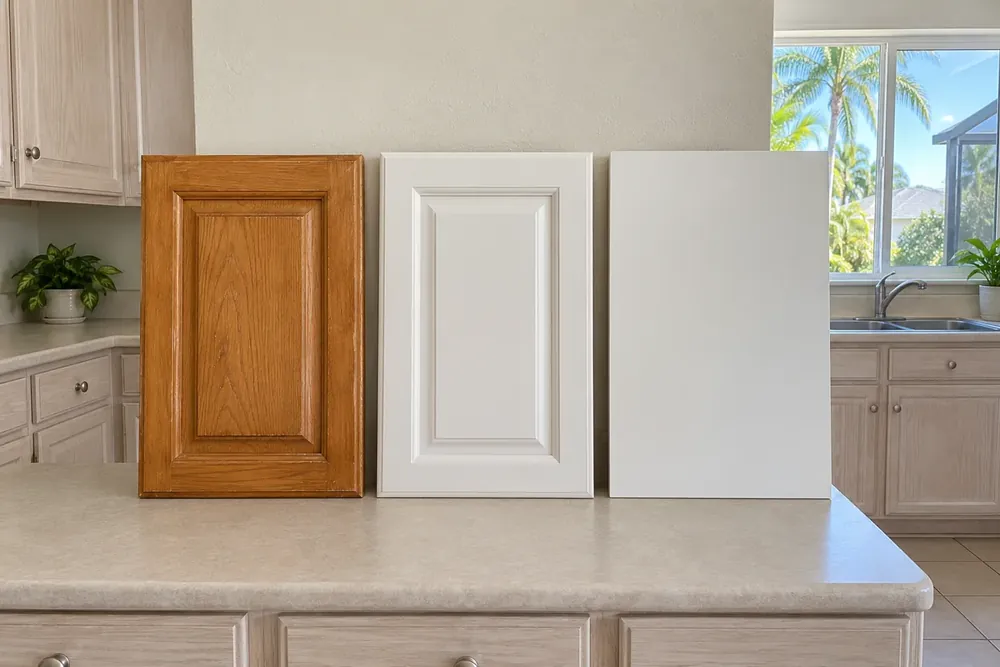
- Painting changes the color of suitable existing doors and boxes, while refinishing renews a compatible exposed wood finish.
- Refacing keeps sound cabinet boxes and their arrangement while replacing doors and drawer fronts and covering exposed box surfaces.
- Replacement supplies new cabinet boxes when the existing storage arrangement or cabinet condition makes a surface update a poor fit.
Cabinet Condition and Storage Set the Direction
| Decision | The choices | Settled before demolition |
|---|---|---|
| Storage arrangement | Keep existing cabinet positions or choose a new cabinet plan | The cabinet arrangement within the existing room |
| Daily access | Retain shelves or specify different drawer storage | Which storage changes matter most |
Keep the existing cabinet arrangement when the storage works and the problem is mainly appearance. Replacement deserves consideration when deep shelves hide everyday cookware or the drawer arrangement does not suit how you cook. Kitchen layout planning helps connect those frustrations to cabinet choices within the room as it stands.
Start with the boxes: the cabinet bodies behind the doors and drawer fronts. Your remodeler examines their condition, checks how the doors fit and discusses which parts could stay. A new color cannot correct a deteriorated cabinet base, and new doors leave the existing cabinet positions in place.
Painting, Refacing and Replacement Keep Different Parts
| Option | Usually fits when | What to confirm |
|---|---|---|
| Painting and refinishing | Boxes and doors are sound, and the existing arrangement works | Surfaces are unsuitable for the proposed finish or cabinet bodies are damaged |
| Refacing | Sound boxes work well, but doors and exposed surfaces need a different look | The boxes are deteriorated or the storage arrangement needs replacement |
| New cabinets | Cabinet condition or storage needs justify new boxes | A finish change alone meets the goal with suitable existing cabinets |
Painting generally retains boxes, doors, drawer fronts and positions while changing the visible color. Refinishing kitchen cabinets can retain visible wood grain when the material and existing coating suit the proposed treatment. Hardware can stay or change, but new handles must be planned around existing holes and door details.
Refacing kitchen cabinets retains the boxes while changing doors, drawer fronts and exposed box surfaces; hinges and handles belong in the written scope too. Cabinet replacement changes the boxes themselves and allows different cabinet sizes and storage combinations. Compare samples beside the counters and backsplash you intend to keep, then consider how the cabinet color reads with existing fixtures and flooring.
Moisture Damage Changes the Cabinet Decision
| Decision | The choices | What to confirm |
|---|---|---|
| Cabinet reuse | Keep sound boxes or replace unsuitable cabinet sections | Which boxes remain in the cabinet plan |
| Finish appearance | Painted color, visible grain or replacement door finish | The agreed door and finish sample |
Swelling, softened material or peeling surfaces near the sink warrant an examination of the cabinet body before choosing a cosmetic treatment. Ask your remodeler to distinguish a surface blemish from material that will not support the proposed update.
Discuss indoor humidity alongside any history of water damage. Water-related, electrical or gas work around cabinets is separate work, so ask on the call who handles it.
Dust and Finish Fumes Need a Household Plan
Dust containment, ventilation and access restrictions belong in the work plan for painting or refinishing. In a closed-up condo, ask where preparation happens, how air leaves the work area and when cabinets can be used under the finish manufacturer's directions. EPA's Best Practices for Indoor Air Quality when Remodeling Your Home page recommends using barriers and ventilation to contain dust and pollutants during a remodel. A dry-looking surface alone does not finalize the household access plan.
EPA's Lead Renovation, Repair and Painting Program page says any renovation, repair or painting project in a pre-1978 home or building that has lead-based paint can easily create dangerous lead dust, and that its RRP Rule applies to anyone paid to perform work that disturbs painted surfaces in homes built before 1978. Mention the home's age during the call so the appropriate precautions enter the discussion before surface preparation begins. Ask the association about its renovation requirements as part of planning a condo project.
Once work is arranged, clear counters and the floor in front of cabinets, put away breakables and keep children and pets outside the work area. Plan food storage in a cooler or second refrigerator when kitchen access is restricted. Ask about dust containment and when water access will be interrupted.
Compare Cabinet Costs Against the Same Scope
A useful cabinet refacing cost comparison includes the doors, drawer fronts, exposed ends, hardware and preparation specified for your kitchen. Painting adds its own surface preparation and finish requirements; replacement brings new boxes, storage fittings and removal into the discussion. Kitchen cabinets cost more or less according to those selections and the condition encountered, so compare written scopes after the cabinets have been seen.
Call about nearby cabinet refacing or cabinet refinishing with the storage and finish changes you want. One of our local kitchen remodeling partners will explain the proposed cabinet work and its price before work begins. The cabinet options service is another starting point for discussing which existing parts are worth keeping.